Inexco - Machinery
Custom Machinery for Extrusion Processes
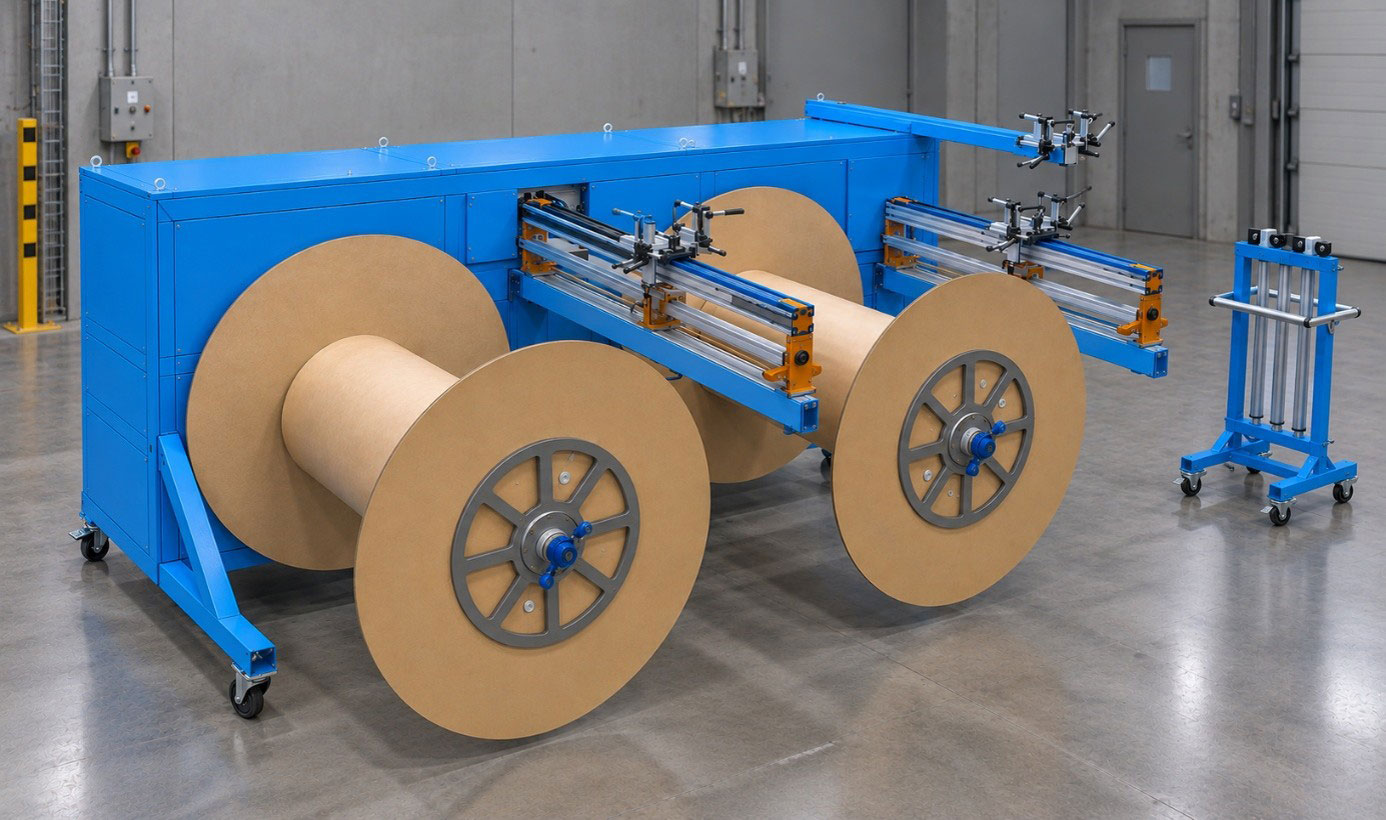
Not every challenge in extrusion can be solved with standard equipment. INEXCO develops and builds custom machinery, process modules, and equipment components for applications where specific process requirements call for a purpose-engineered solution.
The starting point is not an existing machine design, but the function the equipment needs to perform within the production process. Product requirements, materials, process conditions, available installation space, and existing line equipment all define the machine concept.
From individual functional modules to complete custom-built machines, INEXCO combines process expertise, engineering, mechanical design, manufacturing, integration, and commissioning into a complete solution.
- Custom machinery and process modules for extrusion lines
- Calibration and cooling systems
- Die and tooling change systems
- Handling, positioning, and adjustment systems
- Process and functional modules
- Custom-engineered line components
- Retrofit and expansion solutions
From the Process to a Defined Engineering Requirement
The process comes first – not the machine.
Every custom machine project begins with a detailed understanding of the production requirement. Together with the customer, INEXCO analyzes the process, defines the required function, and establishes the technical parameters and constraints.
Rather than considering the machine in isolation, we evaluate how it interacts with the product, material, process, and surrounding line equipment. Available installation space, interfaces, performance requirements, automation, operator access, and maintainability are incorporated into the specification from the outset.
This creates a clearly defined technical basis for the subsequent engineering and machine design.
Together, we define:
- Process requirements and required machine function
- Product and material requirements
- Performance data and process parameters
- Available installation space and equipment layout
- Mechanical interfaces and utility connections
- Electrical and control-system requirements
- Level of automation and operating concept
- Safety, maintenance, and accessibility requirements
- Integration into new or existing production lines
The objective is a clearly defined engineering specification from which a technically sound and cost-effective machine solution can be developed.
Engineering and design
Based on the defined process requirements, INEXCO develops a bespoke machine or functional concept. Different approaches are evaluated in terms of function, technical feasibility, installation space, load capacity, ease of operation and ease of maintenance.
The subsequent technical design and 3D modelling take into account assemblies, drives, motion sequences and mechanical, electrical and fluidic interfaces. This results in a production-ready machine solution in which process requirements, design and subsequent integration are coordinated from the outset.
Our engineering services include
- Concept Development
Development and evaluation of suitable functional and machine concepts based on the defined requirements. - Technical Design
Dimensioning of assemblies, drives, guides and mechanical components, as well as calculation of relevant forces and loads. - 3D CAD Design
Detailed design of the machine and its assemblies, including verification of installation space, motion sequences and mounting conditions. - Components & Interfaces
Selection of suitable components and definition of mechanical, electrical and fluidic interfaces. - Detailed Design for Manufacturing
Development through to a design ready for manufacturing, including drawings, parts lists and the necessary technical documentation.
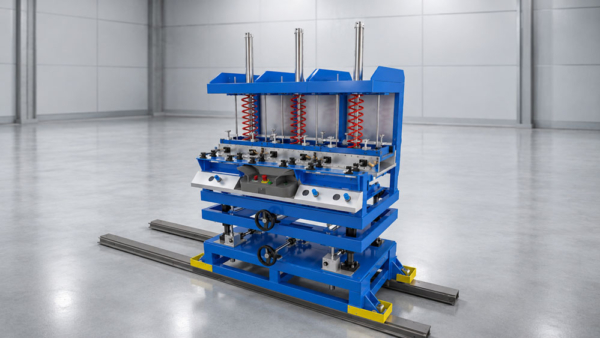
Project Example: Sheet Calibrator
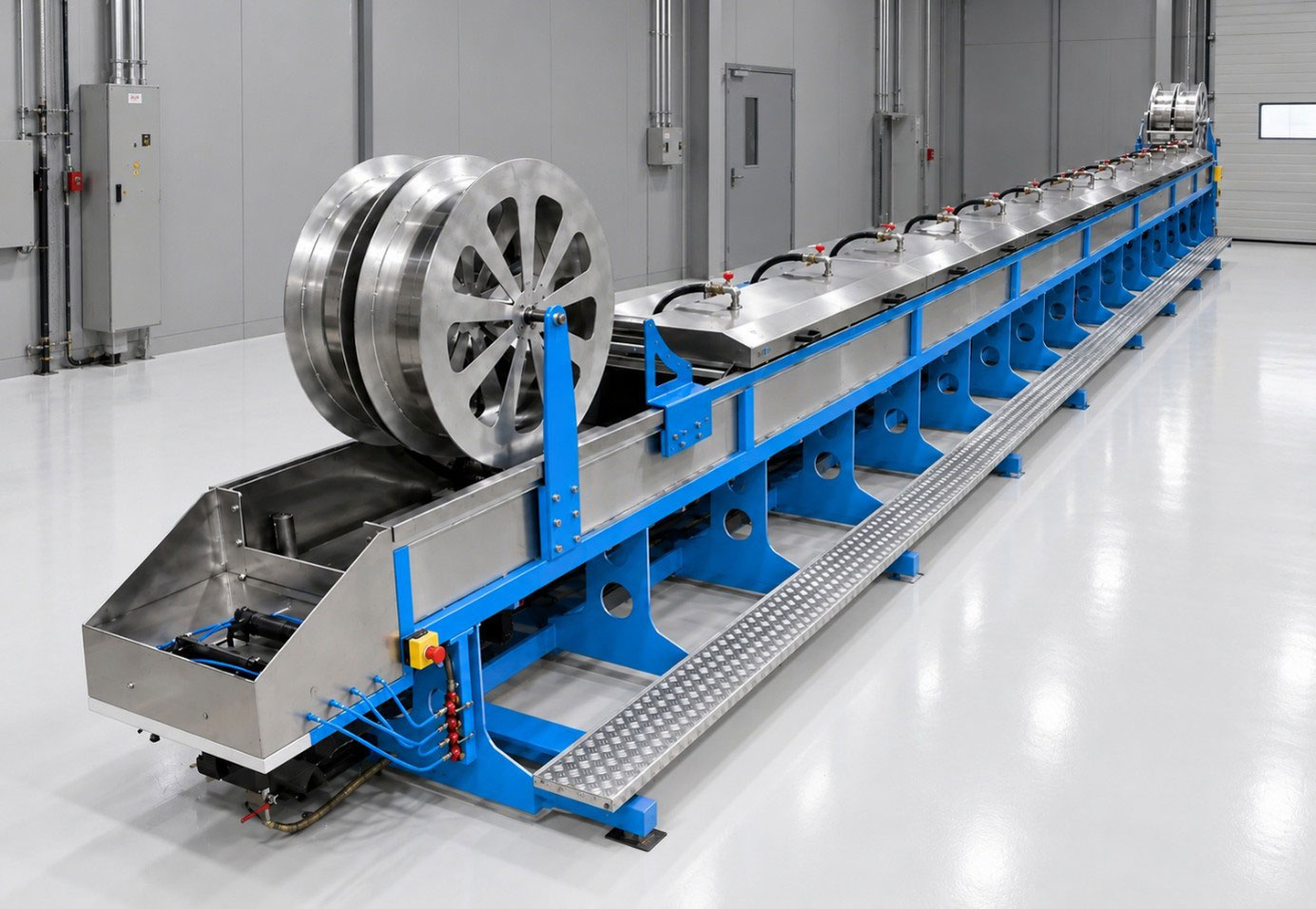
The sheet calibrator is a custom-engineered solution designed around the specific requirements of the extrusion process. Its application-specific design provides controlled calibration and cooling conditions, helping to achieve consistent sheet geometry, dimensional stability, and reliable process performance.
Integration into Extrusion Lines
A custom-engineered machine delivers its full value when it integrates smoothly with the existing equipment, controls, utilities, and production workflow. INEXCO therefore considers all relevant mechanical, electrical, utility, and control-system interfaces from the earliest engineering stage.
This applies to new equipment, retrofit projects, and line expansions. By engineering the machine around the existing installation, interfaces and available space can be planned in advance, reducing the need for extensive modifications during installation.
The result is less installation effort, faster commissioning, and minimal disruption to ongoing production. Existing equipment can remain in use wherever technically practical, while investment is focused on the areas that deliver a clear functional or economic benefit.
Designed around your existing line. Integrated with minimal disruption. Ready for production faster.
-
We begin by assessing the existing equipment, process flow, and relevant installation and operating conditions. Existing interfaces, available space, and potential constraints are identified at an early stage.
-
Mechanical connections, electrical supply, utilities, and control signals are clearly defined. The objective is to integrate the new equipment with minimal modification to the existing extrusion line.
-
The new machine or module is engineered to fit the existing extrusion line and surrounding equipment. Existing line components are retained wherever technically practical, helping to reduce installation effort and unnecessary modifications.
-
Following installation, the new equipment is commissioned and its interaction with the extrusion line is verified. Mechanical functions, utilities, controls, operating parameters, and safety functions are checked and fine-tuned under production conditions.
-
Once the system is running in production, process parameters can be further optimized to achieve the best possible line availability, process stability, product quality, and overall performance.
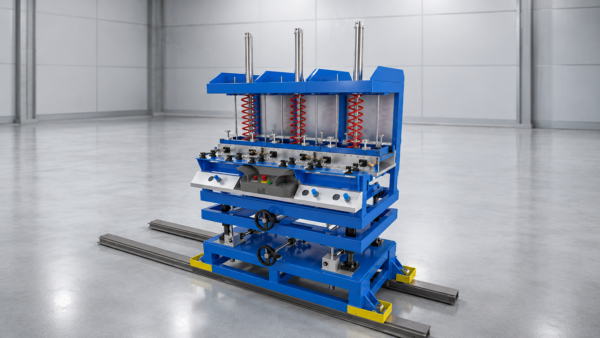
Project Example: Die Change System
The die change system automates key steps in the extrusion die changeover process, reducing manual handling and simplifying product changeovers. Integrated into new or existing extrusion lines, it enables faster, more repeatable die changes, helping to reduce line downtime and increase available production time.
Retrofit
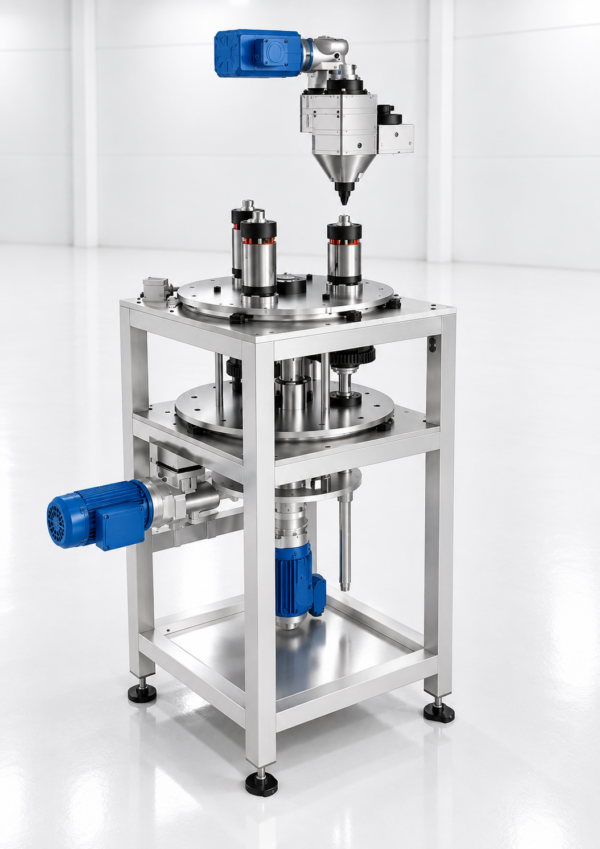
Not every process improvement requires a new extrusion line. In many cases, existing equipment can be upgraded with targeted technical modifications to meet new product, process, automation, or performance requirements.
INEXCO develops custom retrofit solutions ranging from individual functional modules and new adjustment systems to automation upgrades and mechanical modifications of existing machinery.
Existing equipment is retained wherever it can continue to be used effectively. Investment is focused on the areas where additional functionality, improved process performance, or higher production efficiency is required.
Manufacturing and Commissioning
-
Components and assemblies are manufactured to demanding requirements for dimensional accuracy, functionality, reliability, and service life.
-
Mechanical and electrical components are assembled into fully functional modules, subsystems, or complete machines.
-
All relevant functions, components, safety features, and interfaces are checked prior to delivery to ensure the system is ready for installation and commissioning.
-
If required, INEXCO handles the mechanical and electrical installation and integration of the equipment into the existing production environment.
-
Machine functions, interfaces, controls, and process parameters are verified and fine-tuned under actual operating conditions.
-
Ongoing technical adjustments, process optimization, maintenance support, and future system extensions help maintain reliable operation, stable process performance, and long-term equipment availability.