Inexco - Extrusion Dies
Custom Extrusion Dies for Demanding Processes
Extrusion dies have a decisive influence on product quality, process stability, and operating efficiency. That is why INEXCO does not rely on standard solutions, but develops extrusion tooling specifically engineered around the individual extrusion process.
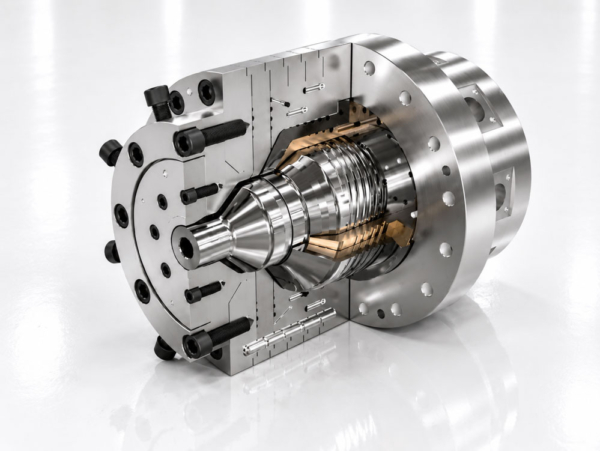
Material properties, rheology, throughput, melt temperature, and product geometry determine more than just the dimensions of an extrusion die. They influence melt flow, pressure distribution, thermal behavior, and ultimately the quality of the extruded product.
INEXCO therefore combines process expertise, flow-optimized design, engineering, and precision manufacturing to create extrusion tooling engineered around the actual production conditions.
Key Benefits
- Custom-engineered die designs
- Flow-optimized geometries
- High-precision manufacturing
- Robust, production-oriented design
- Solutions for demanding extrusion processes
The die is engineered for the process – not the process adapted to a standard die.
Process & Requirements
A high-performance extrusion die starts with a precise understanding of the process. That is why we consider not only the required product geometry, but also the complete set of relevant process conditions under which the die will operate.
-
Polymer type, additives, fillers, viscosity, and shear behavior determine the required flow-channel geometry and influence pressure drop, shear stress, residence time, and melt distribution.
-
The required throughput and operating range determine the necessary flow cross-sections and overall die sizing. Rather than engineering around a single operating point, we consider the full processing range relevant to production.
-
Melt temperature and the permissible temperature range are incorporated into the thermal and rheological design. The objective is controlled thermal conditions without unnecessary thermal stress on the polymer melt.
-
Product dimensions, wall thicknesses, die-gap geometries, and product construction determine the mechanical design of the die and the required melt distribution up to the die exit.
-
Product quality, dimensional accuracy, tolerances, surface requirements, start-up behavior, and process stability are considered from the earliest concept stage.
Together, these parameters establish a clearly defined engineering basis for die design and, where appropriate, CFD-based optimization.
The die is engineered for the process – not the process adapted to a standard die.
CFD Simulation
For demanding extrusion dies, melt flow behavior has a major influence on subsequent process performance and product quality. Using CFD simulation, we can analyze polymer melt behavior during the engineering phase and systematically optimize the die geometry before manufacturing.
The analysis can include velocity distribution, pressure profile, shear rate, residence time, and temperature development within the die. Critical areas such as dead zones, unfavorable flow paths, or non-uniform melt distribution can therefore be identified at an early stage.
Simulation also allows different geometry variants to be compared and the flow channels to be iteratively optimized for the specific extrusion process.
CFD therefore becomes an important engineering tool connecting process requirements with the final die design.
Simulate First. Engineer. Manufacture.
Our CFD analysis evaluates:
- Melt distribution uniformity
- Velocity and pressure distribution
- Shear loading of the polymer melt
- Residence time and potential dead zones
- Thermal behavior
- Comparison and optimization of different geometries
Die Solutions for Different Extrusion Processes
Different extruded products impose different requirements on melt distribution, temperature control, pressure level, residence time, and die geometry. INEXCO therefore develops each die concept around the specific product and process – from specialized tooling for foam extrusion to custom solutions for demanding mono- and coextrusion processes.
-
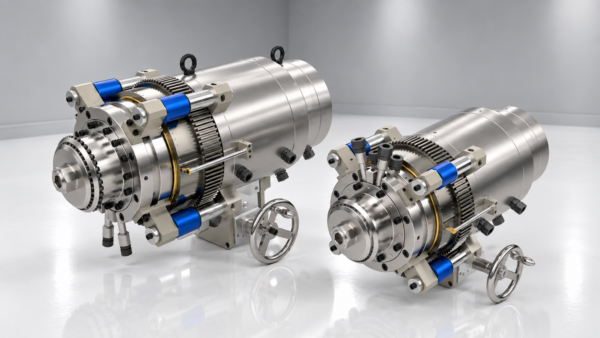
Annular Dies for Foam Film
Precision-engineered annular dies for uniform circumferential melt distribution and controlled formation of the foam film tube.
-
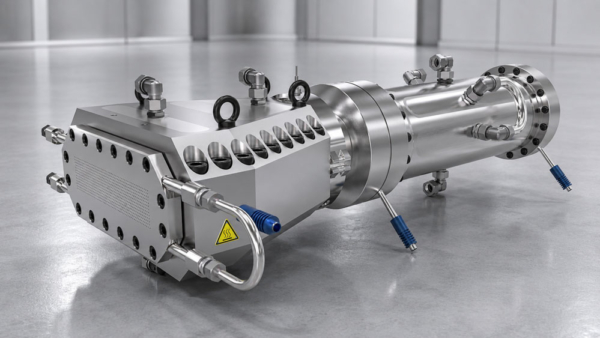
Flat Dies for Foam Sheet
Die systems designed for uniform melt distribution across the full die width and stable, consistent extrusion conditions at the die exit.
-
Coextrusion Dies
Custom-engineered die systems for the precise combining of multiple melt streams and controlled formation of multilayer extruded products.
-
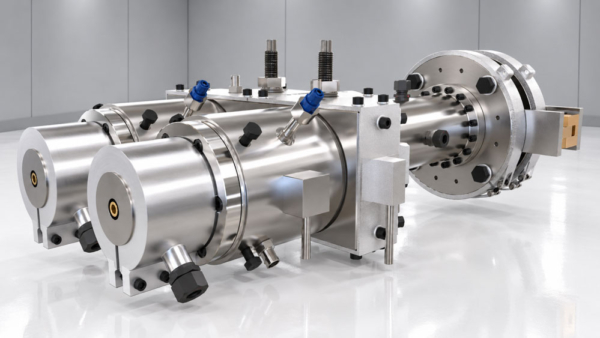
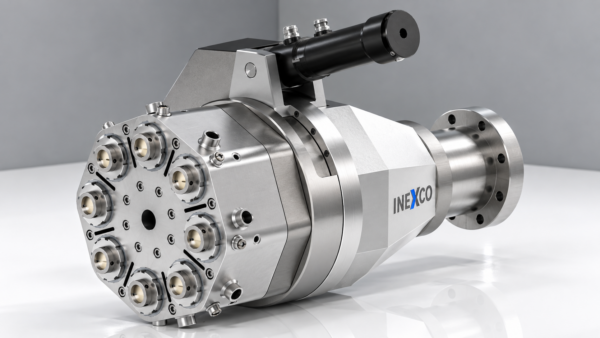
Multi-Strand Extrusion Dies
Die systems designed for the simultaneous extrusion of multiple product strands, maximizing throughput and making efficient use of available extrusion line capacity.
-
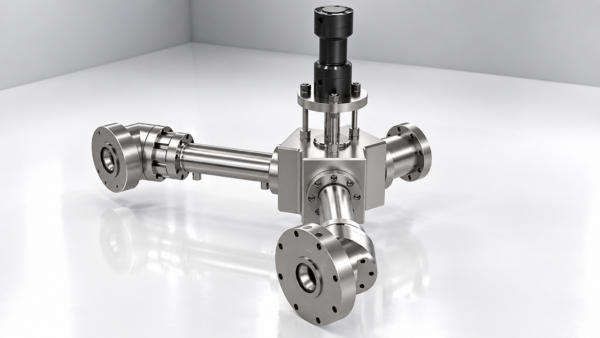
Adapters & Transition Sections
Flow-optimized connections between the extruder, upstream process components, and extrusion die, engineered to match the required interface geometry, operating pressure, and available installation space.
-
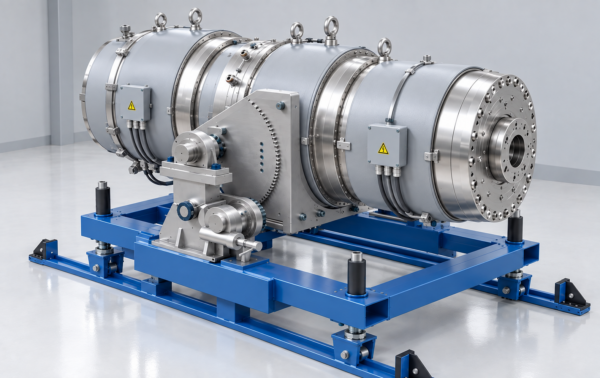
Custom Extrusion Dies
Custom-engineered die solutions for specialized products and extrusion processes where standard tooling cannot deliver the required technical performance or cost efficiency.
From an individual component to a complete tooling solution, one principle remains central: die geometry engineered specifically around the actual extrusion process.
Engineering & Design
The quality of an extrusion die is determined long before the first chip is cut. Effective die design must bring together melt flow behavior, thermal performance, mechanical requirements, and practical operation.
INEXCO therefore develops extrusion tooling around the actual production process. The defined requirements for material, throughput, melt temperature, pressure level, product geometry, and quality are translated into a specific tooling concept.
The result is not an off-the-shelf design, but a fully engineered solution tailored to the specific extrusion application.
From the initial process concept and engineering design to the finished die – complete engineering from a single source.
- Understand the process
- Engineer the flow path
- Design the tooling
- Implement for industrial production
-
The flow channels are designed to guide the polymer melt through the die uniformly and under controlled conditions, with a well-balanced distribution of residence time and pressure.
Changes in cross-section, distribution zones, transitions, and outlet geometries are carefully matched to the material, throughput, and required operating range. -
For complex die geometries, the design is validated and iteratively optimized using CFD simulation. Pressure distribution, flow velocity, shear stress, residence time, and – where relevant – temperature distribution can all be evaluated before manufacturing begins.
Simulation and engineering work together throughout the development process. -
Alongside melt flow, thermal conditions have a significant influence on melt behavior within the extrusion die. Heating and, where required, cooling zones are therefore incorporated into the die design from the outset.
The location and configuration of these zones are matched to the specific die geometry and extrusion process. The objective is to maintain a controlled thermal profile throughout the die and stable operating conditions at the die exit. -
Extrusion dies require more than high manufacturing precision – they must also provide precise, controlled adjustment under production conditions.
Depending on the die concept, INEXCO develops dedicated solutions for die centering, die-gap adjustment, and fine profile correction.
Adjustment mechanisms are designed for repeatable settings and precise corrections during setup and production, helping achieve consistent extrudate geometry and product quality while minimizing setup time. -
Melt pressure, operating temperature, die weight, and process-induced loads are factored into the mechanical design from the outset. Die bodies, bolted joints, flanges, and other load-bearing connections are engineered and dimensioned accordingly.
At the same time, the die is designed for mechanical robustness, ease of assembly and maintenance, and reliable continuous industrial operation. -
Die materials and surface treatments are selected to match the polymer formulation, additives and fillers, processing temperature, and expected wear and corrosion conditions.
Material selection takes into account not only mechanical strength and thermal loading, but also abrasion and corrosion resistance, cleanability, and service life under continuous extrusion conditions. -
An extrusion die does not operate in isolation. From the outset, the design therefore takes the existing extrusion line and all relevant interfaces into account – from the extruder and adapter through upstream process components to the die mounting interface.
Connection geometry, available installation space, utility connections, heating systems, instrumentation, and accessibility are incorporated into the engineering process at an early stage.
Particular attention is given to the interaction between the extruder, adapter, mixing and melt-conditioning components, extrusion die, and downstream equipment.
This integrated approach enables INEXCO to engineer tooling solutions for both new extrusion lines and customer-specific retrofit applications. -
For us, engineering goes beyond the 3D model. Every extrusion die must be designed for precision manufacturing, efficient assembly, accurate setup, and straightforward maintenance.
Manufacturing processes, assembly sequences, accessibility, cleanability, and the replacement of individual die components are therefore considered from the earliest stages of the design process.