Inexco - Recycling
Recycled Materials in Extrusion
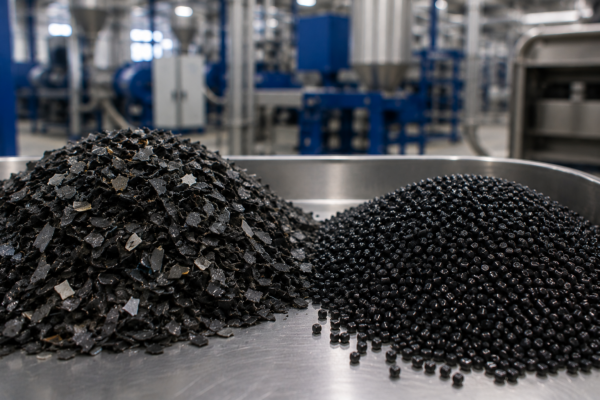
Recycled polymers can show greater variation in composition, viscosity, and thermal history than well-defined virgin materials.
At the same time, the polymer has already undergone at least one thermal processing cycle. Careful control of the processing conditions is therefore particularly important to avoid unnecessary additional thermal exposure.
Variations in feedstock properties can also result in changing thermal and rheological conditions within the extrusion process, making consistent melt conditions more challenging to maintain.
CMX Approach
The CMX provides an additional stage for melt conditioning downstream of plasticization or recycling preparation.
Intensive melt homogenization is combined with active heat transfer, allowing the thermal condition of the already molten polymer to be controlled more precisely before the next process stage.
The CMX does not replace sorting, filtration, or material preparation. Instead, it complements these operations by adding a dedicated thermal conditioning stage that provides an additional degree of control over the melt entering the downstream process.
Key Benefits
- Intensive homogenization of the polymer melt
- Controlled heat removal
- Additional degree of thermal process control
- Adaptable to varying material properties and throughput conditions
- More consistent melt conditions for downstream processing
- Particularly relevant for thermally demanding recycling processes
Variable Feedstock Requires Greater Control of the Melt Process.