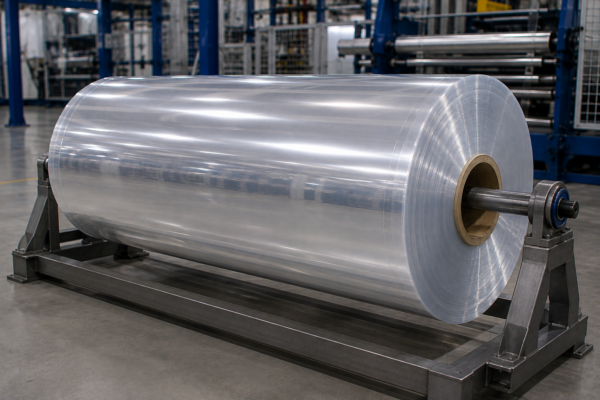
Inexco - PET Film Extrusion
Challenges in PET Film Extrusion
PET processing requires careful control of processing conditions. In addition to moisture content, residence time, and material condition, thermal load is an important process parameter.
At high extrusion rates, increased mechanical energy input can introduce additional heat into the polymer melt. Avoiding unnecessary thermal exposure while maintaining stable processing conditions is therefore particularly important.
CMX Approach
The CMX provides controlled thermal conditioning of the PET melt downstream of plasticization and upstream of the extrusion die.
Intensive melt redistribution promotes a homogeneous melt condition, while temperature-controlled heat transfer surfaces actively remove heat from the polymer melt.
The CMX is engineered around the required temperature change while also taking into account polymer viscosity, throughput, pressure drop, and residence time. This allows the thermal condition of the melt to be precisely controlled before forming without considering temperature in isolation from the overall process.
Key Benefits
- Controlled heat removal from the PET melt
- Intensive thermal homogenization
- Greater control over melt conditions
- Application-specific configuration for material and throughput
- Defined thermal conditions at the die inlet
- CFD-based engineering of melt flow and heat transfer
Controlled Melt Temperature for Demanding PET Extrusion Processes.